
Loading...
Serving Blacksburg, VA and surrounding areas. (540) 418-8765
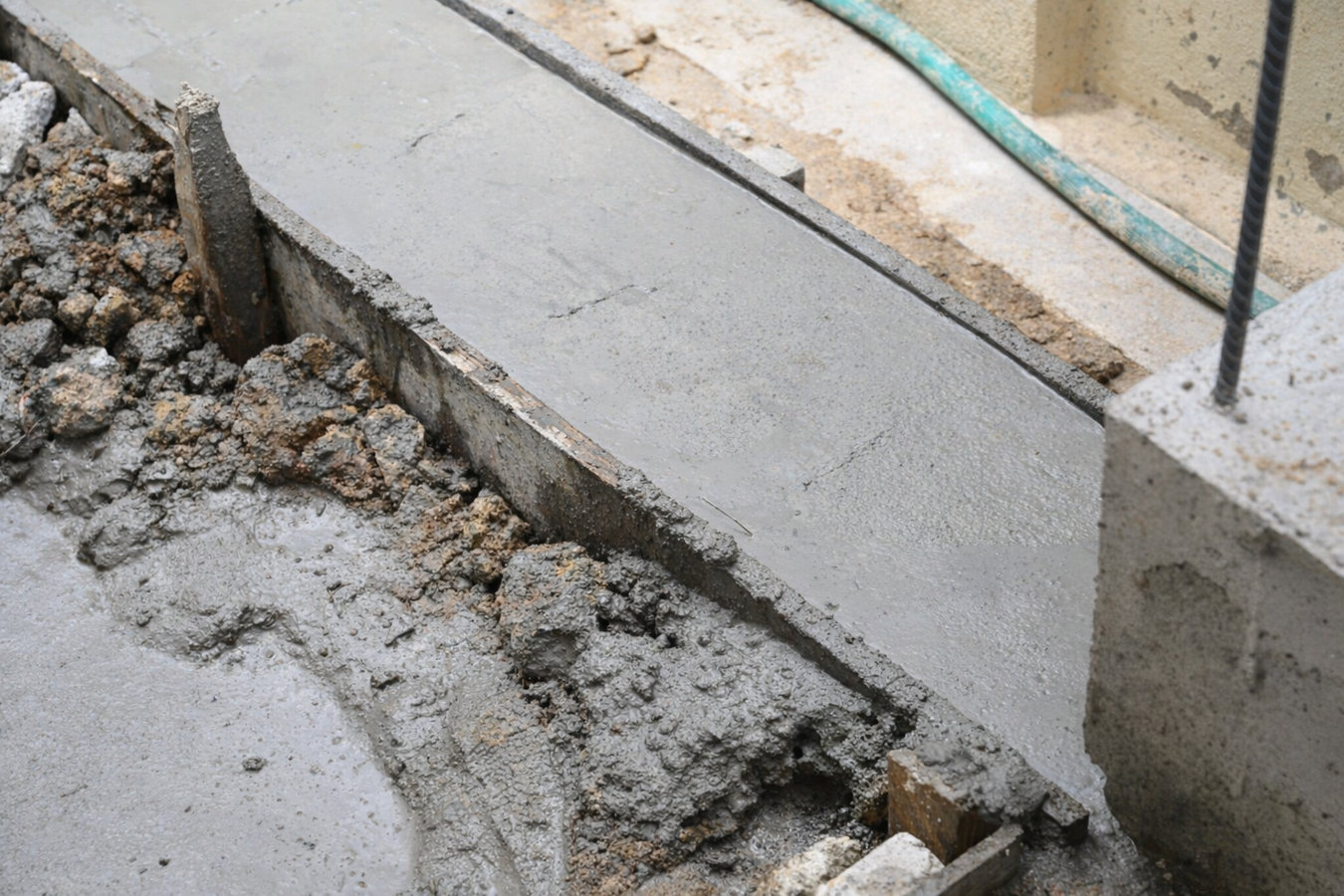
Your patio tilts. Your driveway has a step where it used to be flat. Blacksburg clay soil and hard winters push concrete slabs out of position over time. We lift them back in a single morning - no jackhammer, no days of curing, no full replacement bill.
Foundation raising in Blacksburg lifts sunken or tilted concrete slabs back to level by pumping material beneath them through small drilled holes - most residential jobs take two to four hours and the surface is ready to walk on the same day.
If you own a home in Blacksburg, especially one built between the 1960s and the 1990s near the Virginia Tech campus or in established neighborhoods like Hethwood, your concrete flatwork has been through decades of clay soil expansion, hard winters, and freeze-thaw cycles that gradually erode the ground underneath. When that soil shifts, the slab above it drops - sometimes slightly, sometimes enough to create a real trip hazard or direct rainwater toward your house. The good news is that a settled slab in decent condition does not have to be torn out. Raising it is faster, less disruptive, and costs far less than a full replacement.
If the slab has deteriorated beyond what raising can address, our slab foundation building service covers a complete pour from the ground up - a logical next step when the concrete itself is past saving.
Stand at one end of your driveway, patio, or sidewalk and look along the surface. If one section has dropped lower than the one next to it - creating a lip or a step - the slab has settled. In Blacksburg, this often happens at the joint between the driveway and the garage apron, or where a patio meets the house. A quarter-inch gap is annoying; a two-inch drop is a fall risk.
If you notice puddles sitting on your patio or driveway in spots that did not used to collect water, the surface has likely tilted enough to trap runoff. This is a common early sign in Blacksburg homes where clay soil movement has shifted the slab slightly. Left alone, that pooling water will keep eroding the soil underneath and make the problem worse, season after season.
Knock on the surface with your knuckles or a rubber mallet. A solid slab sounds dull and dense. A hollow or drum-like sound means there is a void - an empty space - underneath the concrete. That void is what allows the slab to flex and crack, and eventually drop further. Void detection is one of the first things we check during an assessment.
Small hairline cracks are normal in older concrete. But cracks that run diagonally from a corner, or that are wider than about a quarter inch, suggest the slab is moving unevenly. In Blacksburg's older neighborhoods, these cracks often appear after a particularly wet spring followed by a dry summer - the classic clay-soil expansion and contraction cycle that is hard on flatwork.
Every foundation raising job starts with a walk of the area. We test for hollow spots, check drainage patterns around the slab, look at crack patterns, and tell you honestly whether raising is the right fix or whether the concrete is too damaged to hold. We work with two methods - traditional cement-based slurry, which has a long track record and suits most residential projects, and expanding polyurethane foam, which is lighter and cures faster and works well on smaller slabs or areas with limited access. The right choice depends on the size of the job, the condition of the soil, and your timeline. Both leave small filled patches that blend in more as they weather. If your project also needs work on the surrounding structure, our concrete cutting service can remove damaged sections cleanly before or after a raise.
We also look at drainage as part of every job. A raised slab that has a downspout still dumping water right next to it will settle again. If we see a drainage issue that will undo the work, we tell you before we start - not after. The American Concrete Institute publishes standards for concrete repair and slab work at concrete.org, and the Virginia Department of Professional and Occupational Regulation handles contractor licensing at dpor.virginia.gov.
For settled driveways and the concrete apron at the base of your garage door - areas that take constant vehicle load and are prone to settling near the joint.
For outdoor living slabs and concrete paths that have tilted toward the house or dropped enough to trap water or create a trip hazard.
For municipal-style sidewalk sections and front entry slabs where a raised lip between sections needs to be corrected for safety and appearance.
Blacksburg sits in the Ridge and Valley region of the Appalachians at roughly 2,100 feet in elevation. The native soil contains significant amounts of clay - a material that expands when it absorbs water and contracts when it dries. That repeated movement is one of the most reliable forces for shifting concrete over time. Pair that with Blacksburg's winters - temperatures regularly drop below freezing from November through March, and the area sees around 20 inches of snow per year - and you have conditions that stress concrete in two different ways simultaneously. Water gets under a slab, freezes, pushes the concrete up, then thaws and drops it. Year after year, that cycle loosens and erodes the soil underneath until a void forms. The concrete above a void has no support and begins to drop. A large share of Blacksburg's housing was built in the 1960s through 1990s, which means that concrete is now 30 to 60 years into this process - exactly the age when settling problems appear most often.
We do foundation raising work throughout the New River Valley, including frequent jobs in Christiansburg and Radford, where the same Appalachian clay soil and freeze-thaw patterns create the same settling problems. If you are in any of these areas and a slab has dropped, the underlying cause and the fix are typically the same as in Blacksburg proper.
Tell us where the slab is and roughly how much it has dropped. We will ask a few quick questions - whether there are cracks, how close the slab is to your house, and whether water has been pooling nearby. We respond to all inquiries within one business day and can usually schedule an estimate visit within a few days.
A contractor walks the area with you, tests for hollow spots, checks drainage patterns, and looks at crack widths. This takes about 20 to 30 minutes. We tell you whether raising is the right fix or whether the concrete is too far gone. If raising makes sense, you get a written quote that accounts for what we actually saw - not a number generated over the phone.
The crew drills small holes through the concrete in a pattern across the sunken area, inserts a hose, and pumps material underneath until the slab returns to level. Most residential jobs run two to four hours. You can watch from a safe distance. When the slab is level, the holes are patched and the area is cleaned up before the crew leaves.
You can walk on the surface within a few hours of completion. For vehicle traffic, we recommend waiting until the next morning - roughly 24 hours - to allow the material underneath to fully set. We walk you through the finished work before we leave and tell you what to watch for over the following weeks, particularly after the first significant rain.
We serve Blacksburg and the New River Valley. Most jobs are completed in a single morning. No obligation estimates.
(540) 418-8765The Ridge and Valley clay that causes most slab settling in this area behaves differently from soil in flatter parts of Virginia. We account for seasonal moisture changes and drainage patterns in every assessment, so the fix addresses the cause - not just the symptom.
Some slabs are not good candidates for raising - they are cracked beyond what a lift will hold. We tell you that upfront rather than taking your money for work that will not last. A trustworthy contractor costs you less in the long run than one who raises a slab that needs to be replaced.
A raised slab settles again if the drainage problem that caused the void is not addressed. We review the grading, downspout positioning, and runoff patterns around every slab we assess and tell you what, if anything, needs to change to protect the result.
Quotes based on phone descriptions are guesses. We visit the site, test the concrete, check the soil conditions, and give you a written estimate based on what we actually found. There are no price surprises on the day of work.
Every foundation raising job we take is paired with a plain-language explanation of why the slab settled and what to watch for going forward. Our goal is a result that holds through Blacksburg winters - not a temporary fix that has you calling a contractor again in two years.
When a slab is too damaged to raise and needs removal, precise concrete cutting lets us take out only the compromised section without disturbing the surrounding concrete.
Learn MoreIf raising is not the right answer and you need a full new slab poured from scratch, our slab foundation work covers the entire process from prep to finish.
Learn MoreCall us today and we will schedule a no-obligation site visit - most Blacksburg jobs are completed within the week.