
Loading...
Serving Blacksburg, VA and surrounding areas. (540) 418-8765
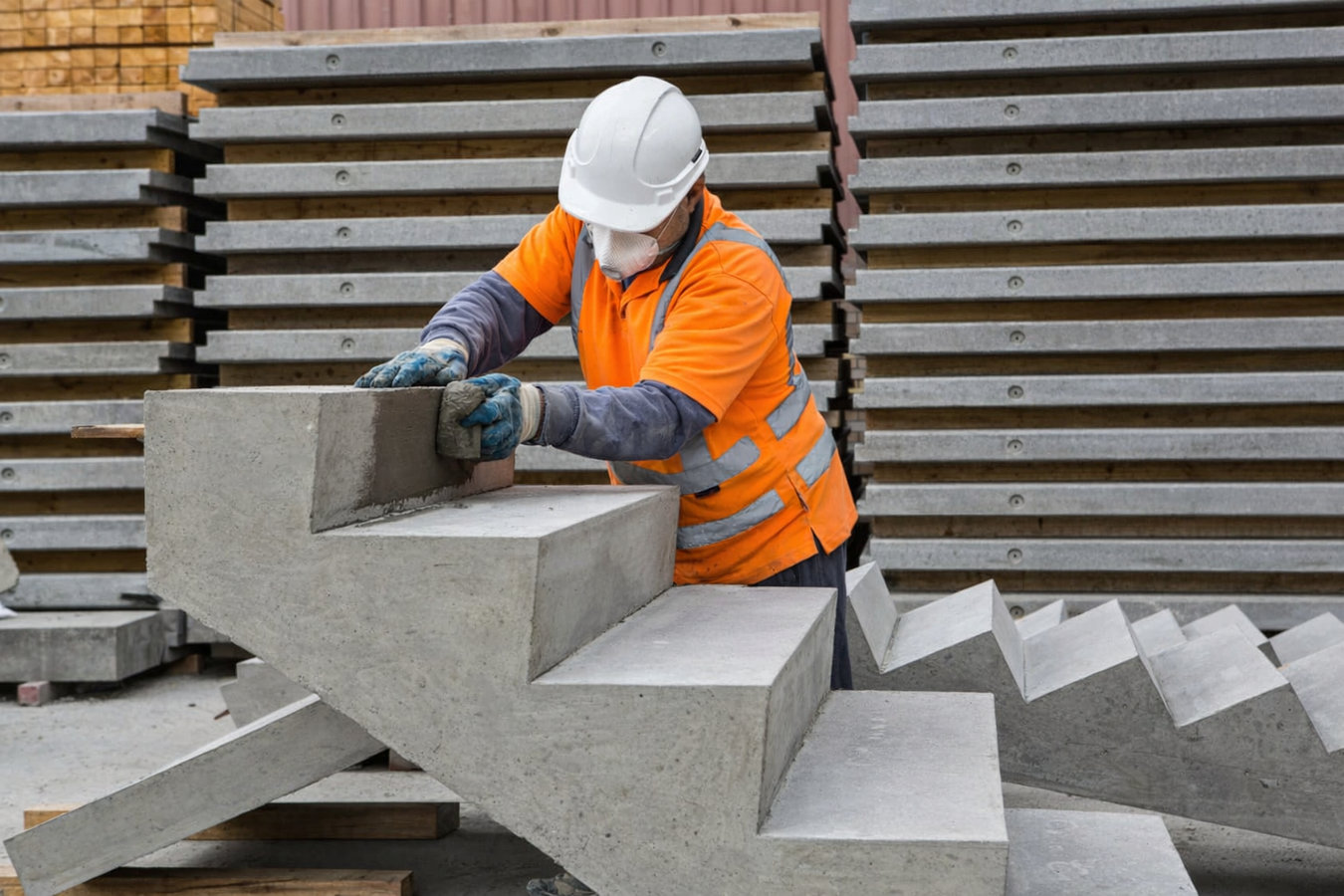
Crumbling, tilted, or uneven steps are a real hazard - for your family and every visitor who comes to your door. We build new concrete steps in Blacksburg that hold up through mountain winters, drain water off the treads, and feel solid underfoot for decades.
Concrete steps construction in Blacksburg means demolishing old steps if needed, compacting the ground and laying a gravel base, building wooden forms to shape the risers and treads, and pouring concrete that hardens into a permanent staircase - most standard front-entry jobs take one to two days of active work, with a waiting period of at least 24 to 48 hours before you can use the steps again.
Many homes in Blacksburg - especially those in the older neighborhoods near Virginia Tech campus and along streets like Prices Fork Road - were built in the 1950s through 1980s. Steps on these homes are often original and have been through decades of freeze-thaw cycles, soil movement, and deferred maintenance. If your steps have started flaking, shifting, or feel uneven underfoot, the underlying issue is usually the base, not just the surface - and that requires a proper replacement, not a patch.
After your new steps are in place, connecting them to a permanent walkway makes the whole entry safer and easier to maintain. Our concrete sidewalk building service uses the same mix and base preparation and can be done as part of the same project visit.
If the top layer of your concrete steps is peeling off in thin chips - especially after winter - the surface has been damaged by repeated freezing and thawing. Blacksburg temperatures cross the freezing point many times each winter, and this kind of breakdown is very common on steps more than 15 to 20 years old. Once the surface starts flaking, it tends to accelerate, and patching rarely holds for long.
Small hairline cracks can be cosmetic, but cracks wide enough to fit a coin into - or cracks that run all the way across a tread - are a structural concern. Water gets into those cracks, freezes, and makes them wider every winter. If you can feel a step flex slightly when you step on it, the concrete has likely lost its structural integrity and needs replacement, not a patch.
If your steps have pulled away from the foundation, tilted to one side, or sunk at one end, the base underneath has settled or eroded. This is a tripping hazard and a water intrusion risk where the gap meets your home foundation. On Blacksburg hilly lots, soil movement and water runoff can undermine the base of steps over time - a common issue in older neighborhoods near campus.
Concrete steps should be built with a slight forward slope so water runs off the front edge rather than sitting on the surface. If you notice puddles forming on your steps after rain - or ice forming on flat spots in winter - the steps were either built without proper slope or have settled into a flat position. In Blacksburg winters, standing water on steps is a slip-and-fall hazard waiting to happen.
Every set of steps we build starts with the same groundwork: demolishing and hauling away the old concrete if it is there, excavating and compacting the ground, and laying a gravel base that keeps the new steps stable through wet springs and dry summers. On top of that base, we build wooden forms to shape the risers and treads to consistent, safe dimensions, then pour concrete mixed for Blacksburg freeze-thaw conditions. A broom finish is the standard choice - the slightly rough texture grips shoe soles when wet or icy, which matters in a climate where steps can ice over overnight without warning. For homeowners who want a cleaner look, a light exposed aggregate finish is also an option that balances appearance and safety.
Steps that connect your front entry to a larger foundation or porch project fit naturally alongside our slab foundation building service. The same base preparation and concrete mix principles apply at both scales, and coordinating the work together often reduces site disruption and total project time.
For steps that have shifted, cracked through, or separated from the house - old concrete removed, base rebuilt, and new steps poured to correct dimensions.
For homes without any steps or adding a new entry point - built from ground level up with a compacted base and freeze-thaw rated concrete.
For homeowners who want practical safety or a slightly more refined look - both finish options provide real grip in Blacksburg wet and icy conditions.
Blacksburg sits at roughly 2,000 feet in the Appalachian highlands, and the elevation brings freeze-thaw cycles that are more punishing than most of Virginia deals with. Temperatures cross the freezing point repeatedly throughout the winter, and any concrete that was not mixed for those conditions - or that was finished without a drainage slope on the treads - starts breaking down from the inside within a few winters. The soils on many Blacksburg lots have a significant clay content that expands when wet and shrinks when dry, which can shift the base under a set of steps over time if that base was not properly prepared. The Town of Blacksburg also requires a permit for this type of structural work, which means we submit plans and the work is inspected before it is considered complete.
We build and replace concrete steps throughout Blacksburg and across the New River Valley, including regular work in Salem and Christiansburg, where the same Appalachian climate and older housing stock present similar challenges. The hilly terrain common to this part of Virginia means drainage planning around the base of steps is something we address on every job - not an afterthought.
Call or use our contact form and we get back to you within 1 business day. We will ask how many steps, whether old steps need to be removed, and what the current ground situation looks like. Most contractors want to see the site before giving a firm price - the slope of your lot, access for a concrete truck, and the condition of existing steps all affect the job. We schedule a 20-to-30 minute visit and give you a written estimate.
Once you agree on a price, we pull the permit from the Town of Blacksburg before any work begins. This usually takes a few business days and is handled entirely by us. After the permit is in hand, you get a scheduled start date. In busy seasons - late spring through summer - lead times of two to four weeks are normal.
On the first day, the crew breaks up and hauls away old steps if removal is part of the job. After the old concrete is gone, they compact the soil and add a gravel base to give the new steps a stable foundation. This prep work is what separates steps that last 30 years from steps that start cracking in five.
The crew builds the forms, pours the concrete, and finishes the surface - typically with a broom texture for grip. You can walk on the steps lightly after 24 to 48 hours. The town inspector comes out to sign off on the permitted work, which we coordinate. Once that inspection is done, the job is officially complete.
Free estimate, no obligation. We respond within 1 business day and handle the permit process from start to finish.
(540) 418-8765We use an air-entrained concrete mix designed for repeated freeze-thaw cycles, not a generic mix suited to warmer Virginia climates. Combined with a compacted gravel sub-base, this is the combination that keeps steps looking and feeling solid through Blacksburg winters for decades rather than a few years. We discuss both with you before any concrete is ordered.
Virginia requires concrete contractors to hold a state license through the Department of Professional and Occupational Regulation, and the Town of Blacksburg requires a permit for this type of structural work. We handle both - our license is current, and we pull every permit before work begins. The town inspection that follows creates documentation that protects you at resale.
When riser heights are inconsistent - even by an inch - people trip, especially in low light or when carrying something. We measure and form every step to consistent dimensions before the pour. This is not a minor detail. It is one of the most direct things a concrete contractor can do to keep your family and your visitors safe at your front door.
Hilly lots, clay-heavy soils, and homes built in the 1960s through 1980s are the norm in Blacksburg's established neighborhoods. We work in these conditions regularly and plan for them from the estimate visit onward. You should not have to explain your sloped lot or aging foundation to a contractor - we expect it and account for it.
Concrete steps in Blacksburg face real seasonal stress that generic work is not always built for. The Portland Cement Association and the International Code Council both set standards on stair geometry and cold-weather concrete placement that we follow on every project - because steps that look fine after six months and fail after three winters are not finished work.
A compacted, properly drained concrete slab foundation - the same base principles that make steps last also apply at full foundation scale.
Learn MoreConnect your new entry steps to a permanent walkway that handles Blacksburg freeze-thaw winters without heaving or cracking.
Learn MoreSummer schedules fill quickly in the New River Valley - contact us now so we can get your project on the calendar before the busy season books up.