Loading...
Serving Blacksburg, VA and surrounding areas. (540) 418-8765
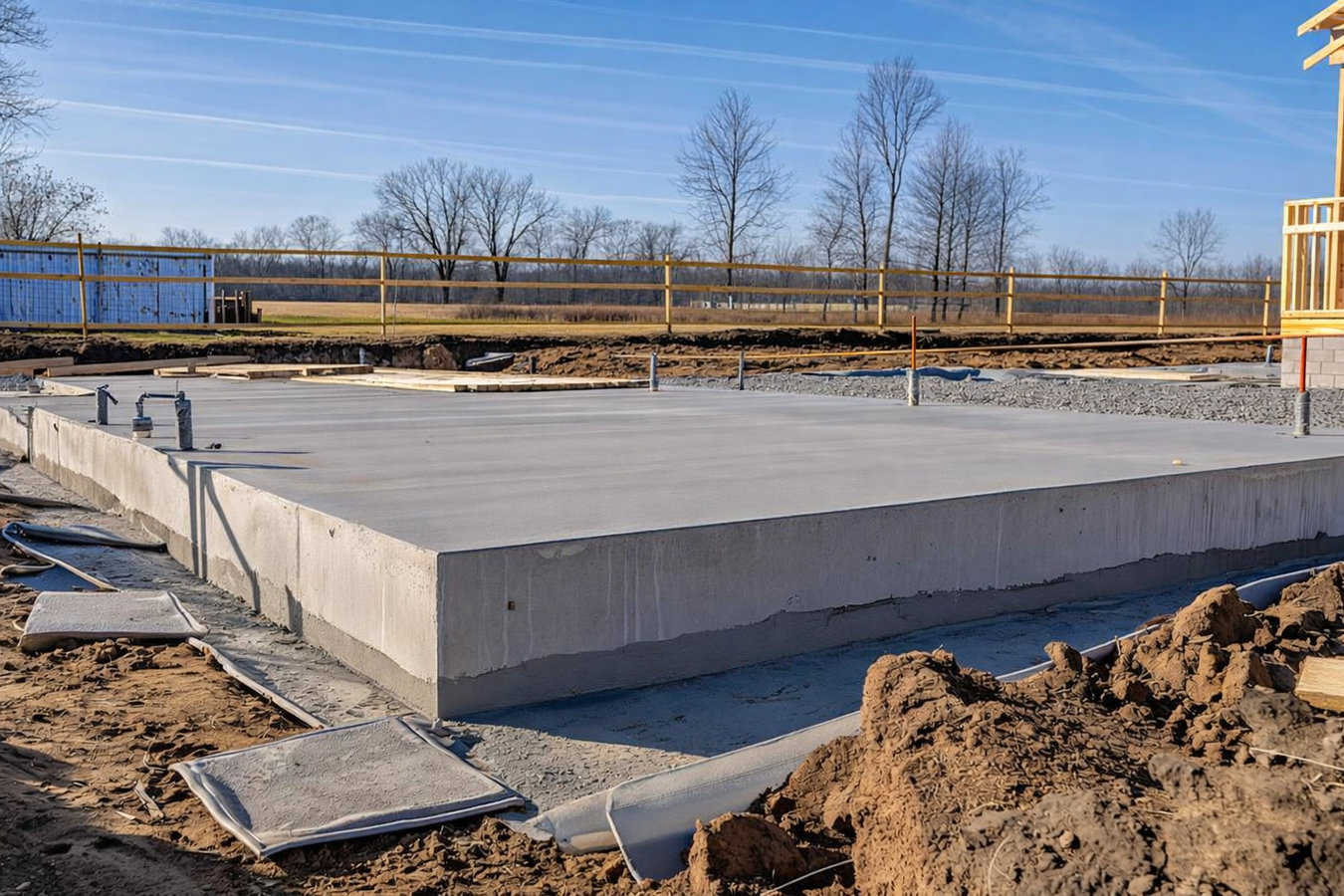
Your foundation carries everything above it - and in Blacksburg, clay soils, steep lots, and hard winters make getting it right the first time more important than anywhere else. We install concrete foundations that are excavated, formed, reinforced, waterproofed, and inspected to last.
Foundation installation in Blacksburg means excavating to below the frost line, building and placing reinforced concrete forms, pouring and curing the walls, applying waterproofing to the exterior, and backfilling with drainage material - most single-family home foundations take one to two weeks of active work, with a curing period before framing can begin.
Everything above the ground rests on the foundation. Walls, floors, doors, and windows all depend on it staying plumb and dry. In Blacksburg, that means a foundation built to handle clay soils that shift with moisture, freeze-thaw pressure at this elevation, and the wet springs that come with the Appalachian climate. Older homes near the Virginia Tech campus - many built in the 1950s through 1980s - often have block-wall foundations that are approaching or past the end of their useful life, which is a different project than a new pour but one we handle with the same care.
For new construction projects where the footprint sits largely at grade rather than below it, our slab foundation building service may be a better fit - particularly on lots where a basement is not practical due to slope or shallow rock.
Diagonal cracks - especially ones that are wider at one end than the other - are one of the clearest signs that your foundation has shifted or settled unevenly. In Blacksburg's clay-heavy soil, this kind of movement is common after a wet spring followed by a dry summer. If you see cracks like this inside or outside your home, it is worth having a contractor assess before the problem gets worse.
When a foundation shifts, the frame of the house moves with it - and that shows up first in your doors and windows. A door that used to swing freely and now drags on the floor, or a window that sticks when it never used to, is your house signaling that something has changed below. This is especially worth paying attention to in older homes near Virginia Tech's campus, where foundations may be 50 or more years old.
If you notice puddles, damp walls, or a musty smell in your basement or crawl space after a rainstorm, water is finding a way in through your foundation. Blacksburg's wet springs and the clay soil that holds moisture close to foundation walls make this a common problem. Left alone, water intrusion leads to mold, wood rot, and eventually structural damage.
A foundation wall that curves inward - even slightly - is under pressure from the soil outside. This is a serious sign that the wall may be failing. In Blacksburg, the combination of clay soil and freeze-thaw pressure during winter can accelerate this kind of damage in older block-wall foundations. If you can see a curve when you look down the length of a wall, call a contractor soon.
Every foundation project begins with a site visit before any quote is given. We walk the lot, assess the soil, and look at drainage before recommending a foundation design - because in Blacksburg, the slope of your property and the character of the ground directly shape how the job needs to be done. From there, we handle excavation, utility coordination, forming, rebar placement, the concrete pour, and exterior waterproofing. Drainage material and proper backfill go in before any soil is pushed back against the walls. For new construction requiring full concrete parking lot building or flatwork around the structure, we can coordinate that work as part of the same project scope to reduce total site disruption.
We manage the full permit process through Montgomery County - including the pre-pour inspection that is required before concrete goes in the ground. For older homes with failing block-wall foundations near the Virginia Tech campus, we offer honest assessment of whether targeted repair or full replacement makes more financial sense - not just a recommendation for the more expensive path. Virginia Tech Cooperative Extension maintains local soil and construction resources for the New River Valley at ext.vt.edu.
For new construction projects on vacant lots - full excavation, forming, pour, waterproofing, and drainage managed from start to permitted close.
For homes with failing block-wall or deteriorated poured-concrete foundations - honest assessment of repair versus replacement with transparent trade-off explanation.
For projects requiring below-grade living space or accessible crawl space - designed for Blacksburg's frost depth and local drainage conditions.
Blacksburg's location at roughly 2,100 feet in the Ridge and Valley Appalachians shapes every foundation project here. The elevation brings more freeze-thaw cycles per winter than most of Virginia, which means foundations need to be set below the frost line - typically 18 to 24 inches in this region - to avoid the heaving that can shift and crack walls over time. The clay-heavy soils common across the New River Valley expand and contract with moisture changes, putting ongoing lateral pressure on foundation walls that were not designed with that movement in mind. Parts of Blacksburg near Stroubles Creek and lower-lying neighborhoods can also have elevated groundwater in spring, which affects both excavation planning and long-term waterproofing design.
We complete foundation work across the full New River Valley, with regular projects in Floyd and Covington, where the same Appalachian terrain and similar soil conditions make the same site-first assessment approach essential. Foundation work anywhere in this part of Virginia is not something you can design from a desk - the specific lot dictates the method.
We reply within one business day. We schedule a site visit to walk the lot, assess soil and drainage, and discuss the foundation type that fits your project. You receive a written estimate that breaks down excavation, forming, concrete, waterproofing, and permit fees separately.
We apply for the Montgomery County building permit before any digging starts. We also coordinate utility marking - required by law before excavation - so the crew knows where gas, water, and electric lines run. You do not need to manage this step.
Once the permit is approved, excavation begins. After forming and rebar placement are complete, the county inspector visits to verify everything before concrete is poured. This checkpoint protects you - problems are caught before they are buried.
The concrete pour typically completes in one day for a standard home. After curing, forms are stripped, waterproofing is applied to the exterior walls, drainage material is placed, and backfilling closes out the excavation. A final inspection closes the permit - keep a copy for when you sell.
We visit your site before quoting. All permits managed for you. No pressure, no obligation.
(540) 418-8765Foundations in the Blacksburg area need to go below 18 to 24 inches to avoid frost heave - a requirement that directly affects excavation depth, cost, and timeline. We design to local frost depth on every project, not to a generic regional standard. Your foundation will not shift because the footings were set too shallow.
Foundation work in Blacksburg requires permits and multiple inspections from Montgomery County's building office. We manage every application, track the permit timeline, schedule each inspection, and keep you informed at every stage. When the job closes, you have a complete documented record - which protects you at resale.
A significant share of Blacksburg's housing stock near Virginia Tech was built in the 1950s through 1970s, and those block-wall foundations have specific failure patterns we know well. We will tell you honestly whether targeted repair makes more sense than full replacement - and explain the trade-offs in plain terms before you commit.
Waterproofing the exterior of foundation walls before backfilling is standard on every project we do - not an optional upgrade. Given Blacksburg's clay soils and wet springs, a foundation without proper exterior waterproofing will eventually let moisture in. The American Society of Concrete Contractors at{' '}
Waterproofing the exterior of foundation walls before backfilling is standard on every project we do - not an optional upgrade. Given Blacksburg's clay soils and wet springs, a foundation without proper exterior waterproofing will eventually let moisture in. The American Society of Concrete Contractors maintains best-practice guidelines for foundation waterproofing that inform our process on every job.
Blacksburg foundation projects have site-specific variables - soil, slope, groundwater, and frost depth - that make local experience a real advantage, not a marketing claim. Every project we complete is permitted, inspected, waterproofed, and built to last in this specific climate.
Durable concrete parking surfaces for residential or commercial properties, using the same sub-base and reinforcement standards that make your foundation last.
Learn MoreA monolithic slab alternative to full foundation walls - often the right choice for Blacksburg lots where a basement is not practical due to slope or rocky ground.
Learn MoreSpring is the busiest season for foundation work in the New River Valley - call or request an estimate now to get on the schedule before it fills up.