
Loading...
Serving Blacksburg, VA and surrounding areas. (540) 418-8765
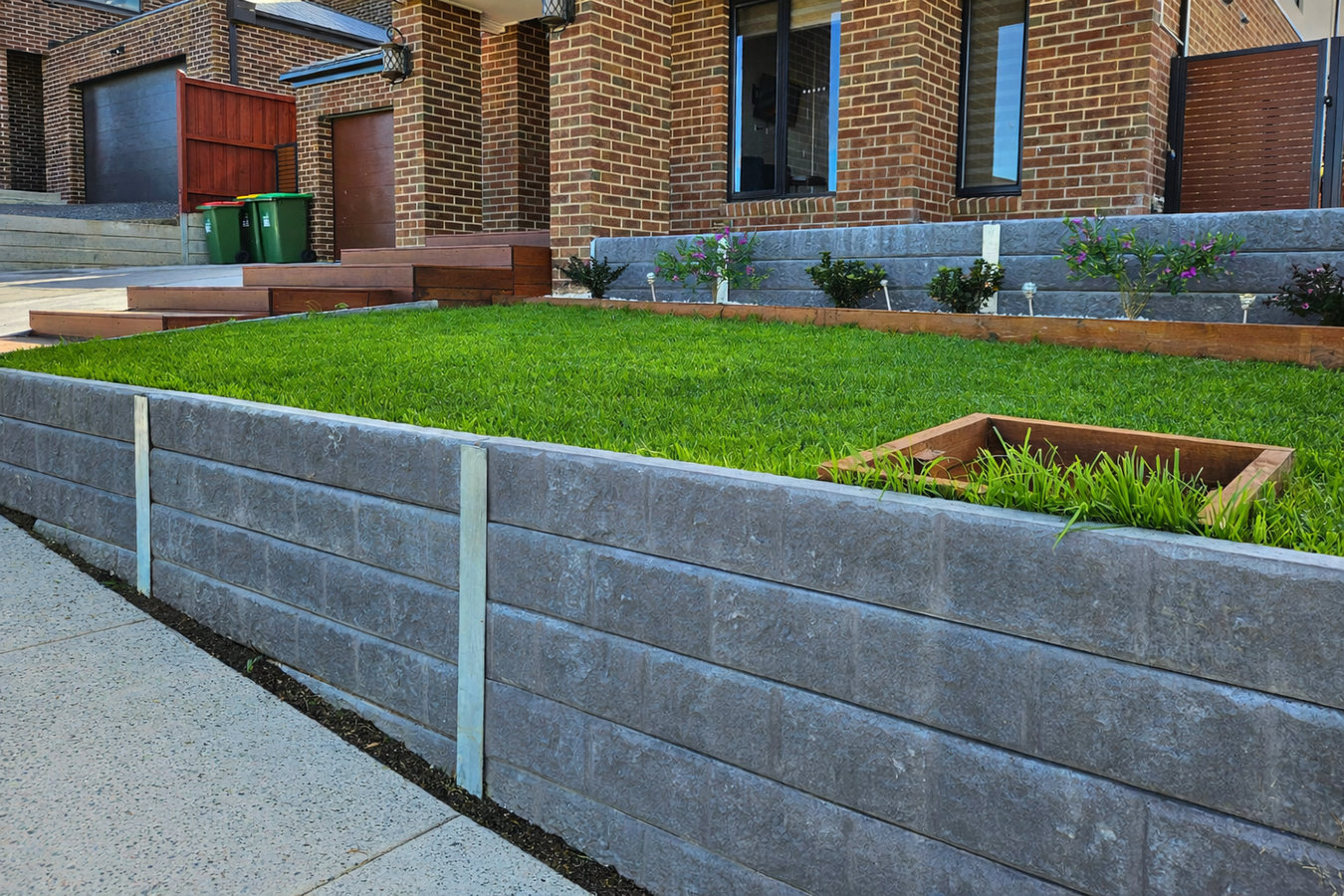
Blacksburg slopes shift, erode, and push back - especially in clay soil and after heavy rain. We build concrete retaining walls that hold the ground where it belongs and turn problem slopes into usable yard space.
Concrete retaining walls in Blacksburg hold back soil on sloped residential lots, stopping erosion and creating flat, usable space where a slope used to be - most residential projects run two to five days from excavation to cleanup, with concrete reaching full strength over the following 28 days.
Blacksburg sits in the Ridge and Valley region of the Appalachians, and most residential lots here have real grade changes. That means many homeowners are not choosing to build a retaining wall - they need one to protect their foundation, stop a slope from eroding toward their driveway, or simply make their yard usable. Concrete retaining walls are one of the most durable solutions for this terrain, lasting 40 to 50 years when built with proper drainage and footings set below the local frost line.
If your project includes adding outdoor living space at the top of a new wall, our concrete floor installation team can help with the slab work that often follows a wall project.
If you notice soil creeping downhill after rain - especially on steeper residential lots - the slope is not stable on its own. Left alone, this erosion can undermine a driveway, fill a drainage swale, or eventually threaten a foundation. A retaining wall stops that movement before it becomes a much more expensive problem.
A wall that is tilting forward or showing horizontal cracks near the middle is under more pressure than it was designed to handle. In Blacksburg's clay-heavy soils, this often happens when drainage behind the wall has failed and water pressure has built up. This is not a cosmetic issue - a leaning wall can fail suddenly and move a lot of soil very quickly.
When water has nowhere to drain on a sloped lot, it collects at the lowest point - often right next to a foundation, fence line, or patio. Blacksburg's frequent spring and fall rain events make this a common complaint among homeowners on hillside lots. A retaining wall with built-in drainage redirects that water away from structures.
Many Blacksburg homeowners on hilly lots have large sections of yard that are too steep to mow safely, let alone use for a garden, patio, or play area. A retaining wall creates a level terrace out of that wasted slope. This is one of the most common reasons homeowners in this area invest in a wall - it transforms how much of their property they can actually use.
We build both poured concrete walls and concrete block walls depending on your site, budget, and how the wall will be used. Poured concrete walls are cast in place on your property and offer a clean, monolithic face - a good choice for taller walls or situations where the wall will be highly visible. Concrete block walls are built unit by unit and allow more flexibility on sloped or irregular terrain. Both types include gravel backfill and perforated drain pipe installed behind the wall as it goes up - the drainage work is not optional; it is what determines whether the wall lasts a decade or five.
We also handle tiered retaining wall systems for larger grade changes, where a single tall wall would require engineering review. Splitting a large grade change into two or three shorter terraced walls is often more cost-effective and easier to permit. If your project involves adding steps to connect terraced levels, our concrete steps construction team works alongside the wall crew on the same job.
Best for homeowners who want a clean, solid face and a wall that can handle significant soil pressure.
A versatile option for irregular terrain or homeowners who prefer a textured, segmental look.
The practical choice for large grade changes - splits a steep slope into two or more usable levels.
Blacksburg's terrain is genuinely different from most of Virginia. Sitting at roughly 2,000 feet in the Appalachian highlands, with clay-heavy soils that swell when wet and shrink when dry, the conditions here put extra pressure on retaining walls compared to lower-elevation, sandier regions. The freeze-thaw cycles that run from December through February - sometimes multiple cycles in a single week - make footing depth critical. A wall with footings set too shallow will heave after the first hard winter, no matter how well it looks when it goes in. We set footings at least 18 inches below grade here, sometimes deeper, because the local frost depth demands it. We are also familiar with the Town of Blacksburg building permit process for walls above the height threshold and handle that application on your behalf. The Town of Blacksburg Building Inspections office handles wall permits and inspections locally.
A significant share of Blacksburg's housing stock was built during Virginia Tech's rapid growth years in the 1960s through 1990s. Many of those homes are on hilly lots with aging walls or drainage systems that were never properly designed. We work on properties throughout Blacksburg and also regularly serve homeowners in Vinton and Christiansburg, where similar ridge-and-valley terrain and soil conditions create the same wall challenges.
Reach out by phone or through the contact form and we reply within one business day. We will ask basic questions about your slope, the approximate wall length, and what you are trying to accomplish. We do not quote retaining walls over the phone - every site is different enough that a visit is required for a reliable price.
We visit your property, look at the slope, soil, drainage, and equipment access, and give you a written estimate with a clear scope of work. If your wall will need a permit from the Town of Blacksburg, we explain the process and confirm we handle the application - no extra charge for pulling permits.
The crew digs down to the required depth below the frost line before any concrete is placed. This is the noisiest, most disruptive phase - expect equipment and soil movement. The footing is the most critical part of the project; a wall is only as good as what it sits on.
The wall goes up in stages, with drainage materials installed behind it as it rises. We compact backfill in layers to prevent future settling. After the wall is complete, the crew hauls away excess soil and restores the area around the work zone as much as possible. If a permit was pulled, we coordinate the town inspection.
We visit your property, give you a written estimate, and handle the Town of Blacksburg permit process for you - no pressure, no obligation.
(540) 418-8765We set retaining wall footings at least 18 inches below grade in Blacksburg - the depth required to get below the local frost line. A footing set too shallow will heave after the first hard winter and crack the wall from below. This is a detail that is invisible once the wall is done, which is exactly why it matters most.
We place gravel backfill and perforated drain pipe behind every wall as it is built - not as a final step. Hidden drainage is what separates a wall that lasts 40 years from one that leans within five. The American Concrete Institute notes that drainage failure is the leading cause of retaining wall problems.
We know the Town of Blacksburg building permit process for retaining walls and handle the application on your behalf when one is required. You do not need to research height thresholds or track down the right forms - we manage that coordination and keep you updated on the timeline.
Every retaining wall project starts with a written estimate that spells out labor, materials, drainage, and permit fees - nothing is left as a verbal understanding. You know the full cost before anyone picks up a shovel. If conditions change mid-project, we tell you in writing before proceeding.
Every retaining wall project in Blacksburg comes down to two things done right: a footing set deep enough to survive the winters and drainage that actually works. We have built walls on Blacksburg's hillside lots long enough to know what fails and what does not - and we build accordingly.
Pour a new concrete slab for a basement, garage, or workshop - with proper base prep for Blacksburg's clay soils.
Learn MoreAdd durable concrete steps that complement a retaining wall and handle Blacksburg freeze-thaw winters.
Learn MoreSpring is the busiest season for wall work in the New River Valley - reach out now to lock in your date before the schedule fills.